
Key Takeaways
-
Thorough site assessment identifying boundaries, utilities, and drainage prevents costly installation delays and compliance issues.
-
Material choice should prioritize security needs and maintenance capacity over initial cost to maximize long-term value.
-
Contractor verification including licensing, insurance, and commercial experience protects your investment and ensures quality results.
-
Strategic scheduling during off-peak hours minimizes business disruption while maintaining customer experience and employee productivity.
-
Proactive maintenance plans with regular inspections extend fence lifespan and preserve your property’s professional appearance.
Commercial fence installation protects your property, defines boundaries, and projects a professional image to customers. Whether you’re securing a warehouse, enclosing a retail space, or establishing industrial perimeters, the right fence makes a significant difference. This guide covers material options, planning considerations, and key contractor questions for partnering with qualified professionals.
Choosing the Right Materials for Commercial Fence Installation
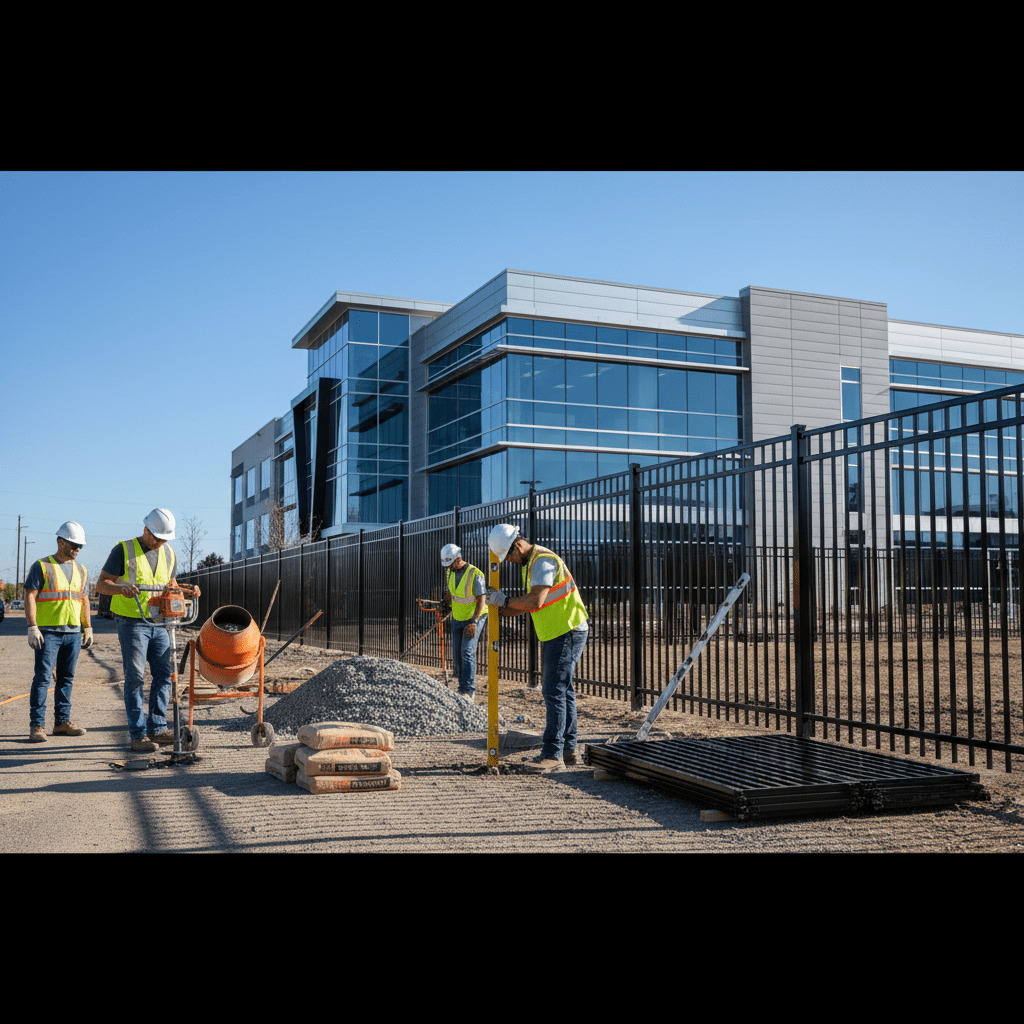
Commercial fence installation transforms how your business manages security, defines property boundaries, and presents itself to clients. Unlike residential projects, commercial fencing demands careful planning around zoning regulations, material durability, and maintenance costs. The right fence protects inventory, controls access, and reduces liability.
What Should You Consider Before Installation?
Successful commercial fence installation requires careful planning across several critical factors. Business owners who address zoning regulations, material durability, security requirements, and maintenance needs upfront avoid costly mistakes and ensure their investment delivers long-term value.
-
Plan for commercial fence installation by conducting a thorough site assessment that identifies property boundaries, existing utilities, drainage patterns, and access points. This upfront planning prevents costly delays and ensures your fence meets zoning requirements while accommodating future expansion needs. Professional contractors can spot potential issues before they become expensive problems.
-
Select materials based on your specific security requirements, maintenance capacity, and budget constraints rather than choosing the cheapest option. Chain-link offers economical security for large perimeters, while aluminum provides attractive durability for customer-facing areas. Each material type serves different functional needs, so match your selection to your business priorities.
-
Verify your contractor’s credentials and experience with commercial projects before signing any agreements. Ask detailed commercial contractor questions about licensing, insurance coverage, previous installations similar to yours, and how they handle unexpected site conditions. A qualified contractor should provide references and clearly explain their installation process.
-
Schedule installation during off-hours or slower business periods to minimize disruption to your operations. Commercial fence installation often requires equipment access, temporary barriers, and noise that can impact customer experience or employee productivity. Coordinate timing with your contractor to protect your business continuity while ensuring quality work.
-
Establish a maintenance plan from day one that includes regular inspections, prompt repairs, and cleaning schedules appropriate for your fence material. Commercial fencing represents a significant investment, and proactive maintenance extends its lifespan while preserving your property’s professional appearance. Document inspection findings to track deterioration patterns over time.
Planning and Compliance for Business Fence Projects
Commercial fence installation requires careful planning and professional expertise to ensure your business gets a secure, long-lasting perimeter. Unlike residential projects, commercial installations involve complex site assessments, compliance with local zoning regulations, and material selections that withstand heavy use. You’ll need to evaluate your property’s security needs and determine which fence types best serve your goals.

How long does commercial fence installation typically take?
Most commercial fence projects take anywhere from a few days to several weeks depending on the size and complexity. A simple perimeter fence for a small business might be completed in 2-3 days, while larger properties or those requiring specialty materials can take 2-4 weeks. Weather conditions, ground hardness, and permit processing also affect the timeline. Your contractor should provide a detailed schedule during the planning phase, but expect some flexibility for unexpected challenges like underground utilities or delayed material shipments.
What permits are required for commercial fence installation?
You’ll typically need building permits from your local municipality before starting any commercial fence installation. Most jurisdictions require permits for fences over a certain height, usually 6 feet, and those installed near property lines or rights-of-way. Some areas also mandate setback requirements from streets or neighboring properties. Commercial properties may face additional zoning restrictions that residential installations don’t. Your fence contractor should be familiar with local regulations and can often handle the permit application process for you. Before hiring anyone, confirm they understand your area’s requirements by asking the right commercial contractor questions.
What's the most durable material for commercial fencing?
Steel and aluminum are among the most durable options for commercial properties. Chain-link with galvanized or vinyl coating offers excellent longevity at a lower cost, often lasting 20+ years with minimal maintenance. Ornamental aluminum combines durability with aesthetic appeal and won’t rust like iron. For maximum security, steel or wrought iron provides strength but requires regular maintenance to prevent corrosion. Vinyl has gained popularity for its low maintenance needs, though it may not withstand extreme impacts as well as metal. The best choice depends on your specific needs: security level, budget, appearance standards, and local climate conditions.
Protecting Your Investment with Professional Installation
A well-planned commercial fence installation protects your property, defines your brand presence, and delivers long-term value. Selecting the right materials and working with experienced contractors ensures your investment serves your business for decades. Whether you’re securing a warehouse, enhancing curb appeal, or meeting regulations, professional installation makes the difference.