
By Billy Morrison | AAA Fence
Table of Contents
Key Takeaways
- AAA Fence has helped Volusia County families weigh these options since 1958, and an experienced vinyl fence installation contractor can tailor the recommendation to your lot, drainage, and long-term design goals.
- When leaning, widespread cracking, or failing posts appear along the line, replacement by a vinyl fence installation contractor is the more cost-effective long-term choice.
- A vinyl fence installation contractor works through a clear sequence: confirming property lines and permits, marking post locations, digging and setting posts in concrete, then assembling rails, panels, and gates.
- A reputable vinyl fence installation contractor starts with an on-site measurement, a review of your property survey, and a written estimate that spells out materials, layout, and timeline.
A vinyl fence installation contractor is a fencing professional who plans a project, sources PVC materials, and installs the finished fence for residential and commercial properties, setting posts in concrete, securing rails, and hanging gates to deliver privacy, security, and lasting curb appeal. For Volusia and Flagler County homeowners tired of a sagging fence, the right professional makes the difference between a quick patch and decades of value. Vinyl fencing demand keeps climbing because homeowners want materials with lasting durability and minimal upkeep. In this guide, AAA Fence explains what to expect, how to vet a reputable vinyl fence company, and how installation and material costs break down.
What Does a Vinyl Fence Installation Contractor Do?
A vinyl fence installation contractor plans, sources, and professionally installs PVC fencing that marks property lines, encloses pool areas, and adds privacy to a yard. Hiring one means posts are set correctly, panels stay level, and local permit steps are handled, protecting the investment you make in your property.
Why does that expertise matter so much? Vinyl is durable and low maintenance, yet a lasting result depends on proper technique: footings dug to the right depth, posts anchored in concrete, and rails locked in square. A seasoned crew reads your soil, slope, and drainage before the first hole is dug. For a clear picture of the process, see our guide on what to expect with a vinyl fence installation.
Demand for skilled installers is climbing too. In the Southeast, residential fencing made up more than a fourth of volume in 2022 and is forecast to grow the strongest through 2025, according to fencing market research from Principia. With more contractors to sift through, knowing the right questions to ask helps you avoid costly rework. If you are still weighing materials, our breakdown of wood versus vinyl compares maintenance and longevity.
At AAA Fence, a veteran and family-owned company serving the community since 1958, a vinyl fence installation contractor brings decades of local craftsmanship to every project, building a fence made to stand up to Florida sun, storms, and daily use.
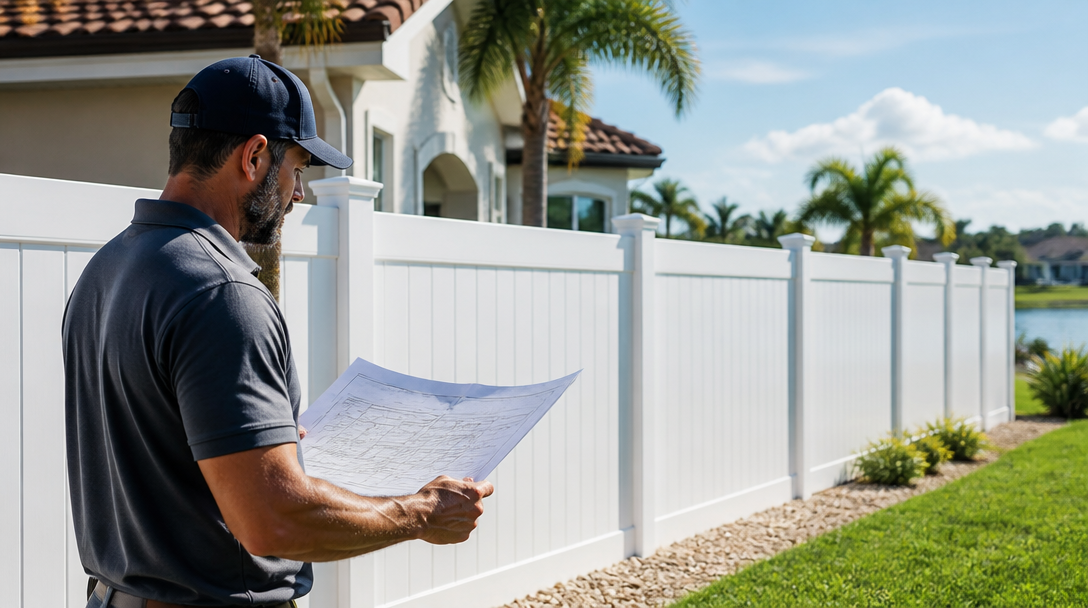
What Causes Vinyl Fences to Fail?
Vinyl fences fail for a handful of predictable reasons: improper post depth, sun and heat exposure, ground movement, storm impact, and low-grade materials installed without care. Spotting these warning signs early tells you whether a repair will do or a replacement is smarter. A qualified vinyl fence installation contractor can catch the difference before a small crack becomes a leaning section.
One of the most common causes we see is shallow or poorly anchored posts. When posts are not set deep enough in concrete, panels shift, gates sag, and the whole line begins to lean after a few storm seasons.
Florida's climate adds its own stress. Intense sun, humidity, and salt air can dull color and weaken lower-quality PVC, while summer heat and afternoon storms test every connection point. At AAA Fence, we often see fences installed on the cheap warp, crack, or fade years before a properly built fence would.
Watch for the telltale signs: hairline cracks near fasteners, rails pulling loose from posts, panels that bow in the heat, gates that no longer latch, and mildew streaks that keep returning. If you notice these, it may be time for professional vinyl fence repair rather than another temporary patch. Cleaning your vinyl fence the right way also prevents damage that mimics true wear.
As a veteran and family-owned business serving Daytona Beach, Volusia County, and Flagler County since 1958, AAA Fence has watched what our coastal weather does to fencing. That experience is why many homeowners here weigh choosing vinyl fencing when it is time to replace an aging fence.
Why Does Florida Sun Damage Vinyl?
Sun exposure is the single biggest long-term threat to a vinyl fence in Central Florida. According to materials research from Vecor Technologies, photodegradation in PVC results in changes in color, reduced mechanical strength, and loss of flexibility. That is why quality vinyl carries UV inhibitors, and why a reputable vinyl fence installation contractor uses fencing built for our climate.
- Improper post depth: posts not set deep enough in concrete let panels lean and gates sag.
- Sun and heat: prolonged UV and Florida heat can fade color and warp lower-grade PVC panels.
- Storm and impact damage: high winds and stray impacts crack rails and loosen fasteners.
- Ground movement: shifting or eroding soil slowly pulls posts out of alignment.
- Rushed installation or low-grade materials: the fastest path to early failure, which a licensed vinyl fence installation contractor helps you avoid.
- Recurring mildew and grime: dark streaks that signal trapped moisture and neglected upkeep.
Rule of Thumb: Repair or Replace?
- If damage is isolated to one or two panels and the posts are still solid, a targeted repair is usually enough. When leaning, widespread cracking, or failing posts appear along the line, replacement by a vinyl fence installation contractor is the more cost-effective long-term choice. When in doubt, ask a trusted local team for a free, no-pressure inspection.
Quick Facts
- 1958 – Family and veteran-owned since
- 60+ yrs – Serving Volusia and Flagler County
- 1-Year – Labor warranty on installations
- Lifetime – Workmanship warranty coverage
What Happens During a Vinyl Fence Installation?
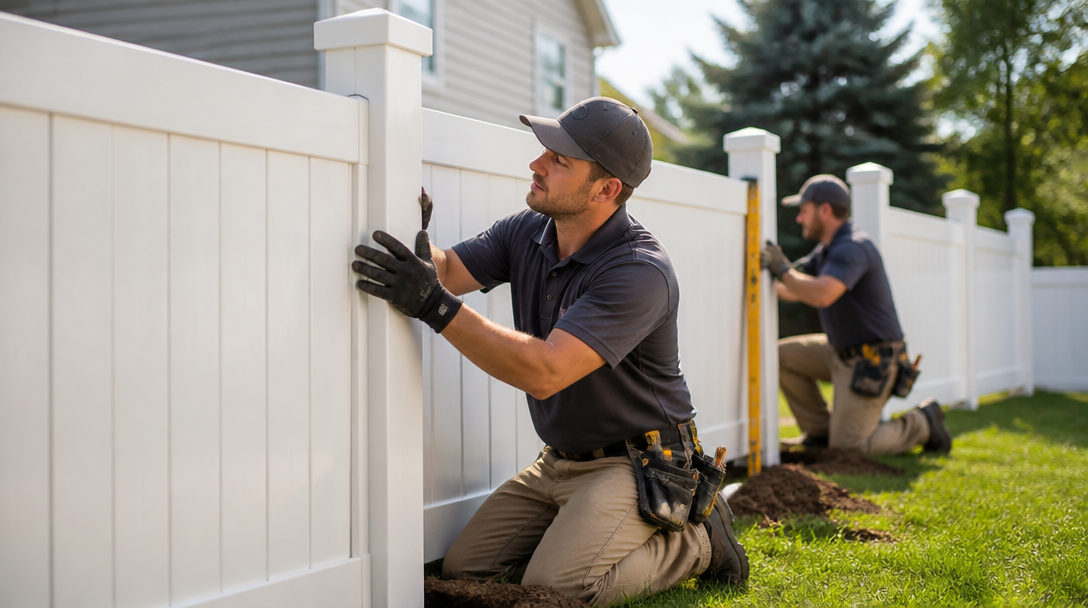
A vinyl fence installation contractor works through a clear sequence: confirming property lines and permits, marking post locations, digging and setting posts in concrete, then assembling rails, panels, and gates. AAA Fence follows this order so every section lines up straight, sits plumb, and meets local code before the final walkthrough.
A reputable vinyl fence installation contractor starts with an on-site measurement, a review of your property survey, and a written estimate that spells out materials, layout, and timeline. This planning stage is where a thorough contractor catches obstacles like sprinkler lines, drainage slopes, and setback rules.
Next comes permitting and site preparation. Depending on your Volusia or Flagler County jurisdiction, your fence may need a permit and a call to locate underground utilities before any digging starts. Clearing the fence line and staking the layout keep the project on schedule.
With the site marked, the crew sets the posts, anchoring each one in concrete and letting it cure so the structure stays rigid against Florida wind and heat. Rushing this step is a common reason a fence leans within a few seasons.
Once the posts are solid, rails and panels go in, followed by gates and hardware. Our guide on choosing a vinyl fence gate explains why the entry point shapes both security and daily convenience, and a professional fence installation finishes with a cleanup, a section inspection, and a warranty review.
Why Does Proper Post Setting Matter?
Proper post setting matters most because the posts carry the entire fence line's weight and wind load. A skilled crew digs each hole to the right depth, sets the post plumb, and anchors it in concrete before the mix cures. Skimp here and panels sag, gates bind, and the fence leans after the first storm season.
- Consultation and measurement: A vinyl fence installation contractor visits, reviews the survey, and provides a written estimate covering materials and layout.
- Permitting and utility locates: The contractor confirms whether your municipality requires a permit and has underground utilities marked through Sunshine 811, Florida's free locating service.
- Site preparation: Old fencing is removed, the fence line is cleared, and post positions are staked to the approved layout.
- Post setting: Holes are dug, posts are set plumb in concrete, and the concrete cures for stability.
- Rail and panel assembly: Rails, pickets, and privacy panels lock into the cured posts to form level runs.
- Gate and hardware installation: Gates, hinges, and latches are hung and adjusted for smooth, secure operation.
- Final walkthrough: The crew cleans the site, inspects each section, and reviews your warranty coverage.
Planning a Pool Enclosure? Check the Barrier Rules First
- Planning a fence that doubles as a pool enclosure changes the requirements. Florida's Residential Swimming Pool Safety Act requires a pool safety barrier that is at least four feet high on the outside, so an experienced vinyl fence installation contractor builds barrier height, gate placement, and latch positioning into the layout before installation.
Which Fence Material Should You Choose?
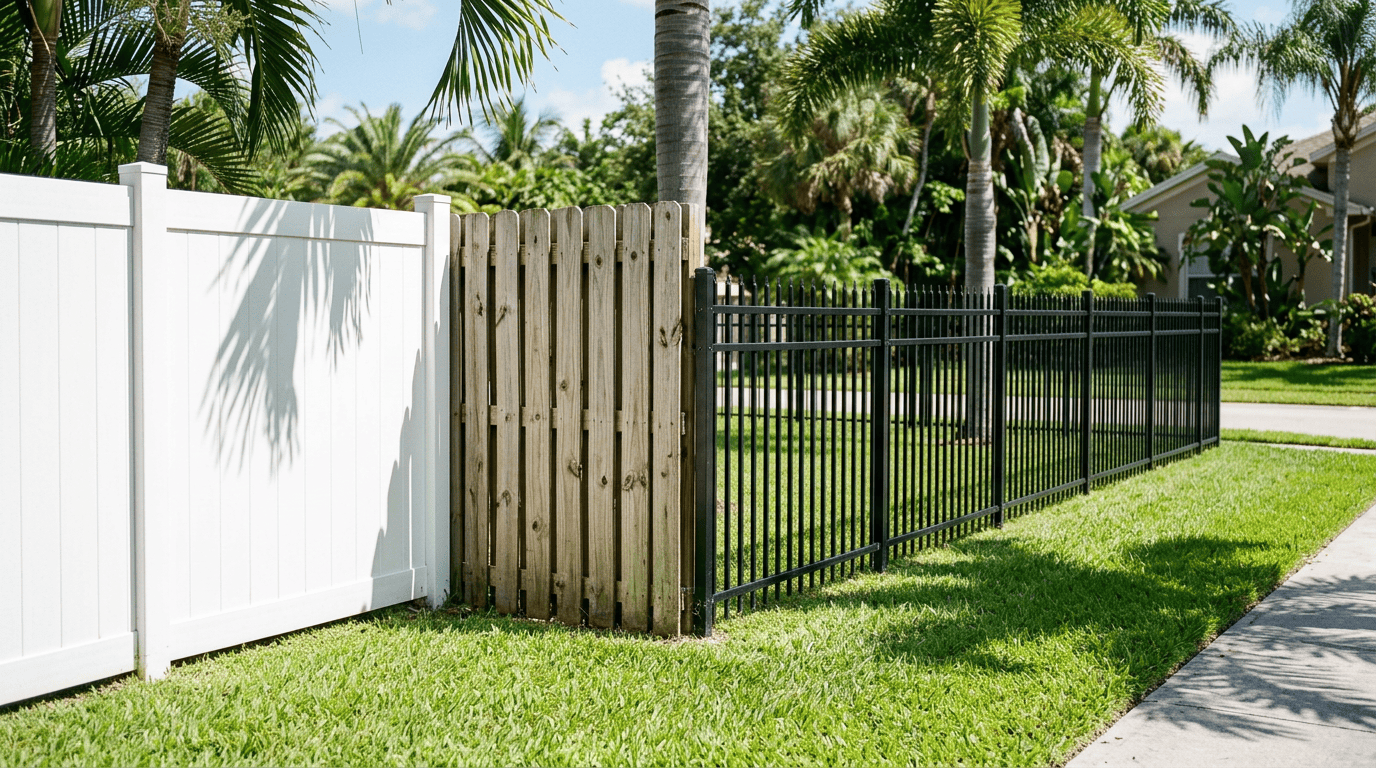
Choosing the right fencing material comes down to matching durability, maintenance, and budget to your Florida property. A trusted vinyl fence installation contractor will walk you through vinyl, aluminum, wood, and chain link so you weigh real tradeoffs instead of guessing, because each material behaves differently in coastal heat, humidity, and salt air. Vinyl has surged in popularity since it resists rot, pests, and fading while asking for little upkeep beyond an occasional rinse. Explore the full range of vinyl fence options before you commit, since privacy, picket, and semi-privacy styles each serve different goals. Aluminum, by contrast, delivers ornamental strength that many coastal homeowners prefer for its corrosion resistance and open sightlines. Wood remains a familiar, lower-entry choice, though premium lumber has faced rising prices and labor pressures in recent years. Chain link stays economical for utility and security uses where appearance matters less. Because pricing shifts with material, height, and linear footage, reviewing fence installation cost by material helps you set a realistic budget before signing anything. AAA Fence has helped Volusia County families weigh these options since 1958, and an experienced vinyl fence installation contractor can tailor the recommendation to your lot, drainage, and long-term design goals.
What Matters Most When Comparing Materials?
Performance tops the list for most homeowners, and it should drive your material choice. In practice, that means weighing weather resistance, maintenance load, and expected lifespan against upfront cost. Vinyl wins on low upkeep, aluminum on coastal strength, and wood on a traditional appearance. If aesthetics rank high, a modern black vinyl fence blends curb appeal with the same low-maintenance durability. Matching the material to how you actually use your yard prevents costly regrets later.
|
Fencing Option |
Documented Figure or Spec |
Best Suited For |
|---|---|---|
|
Vinyl (PVC) |
Posts set in a minimum of 24 inches of concrete, per VEKA installation guidelines |
Low-maintenance privacy in Florida heat and humidity |
|
Vinyl vs. wood market trend |
Residential fencing demand rose from 6 billion dollars in 2021 to 7.1 billion dollars in 2022, per Principia research |
Homeowners tracking value as vinyl gains share |
|
Performance priority |
59 percent of homeowners rank performance as very important when choosing fencing, per Principia survey |
Buyers favoring durable, low-upkeep materials |
|
Permit and site plan |
Recorded Notice of Commencement required for jobs over 5,000 dollars, per Flagler County |
Any Volusia or Flagler County install |
Ready for a Fence Built to Last?
Whether you are replacing a failing fence or securing a pool area, our team is ready to serve as your vinyl fence installation contractor. As a veteran and family-owned business serving the community since 1958, we bring transparent pricing and the craftsmanship you can trust. Reach out to request your free estimate and let us build something that lasts.
Frequently Asked Questions
Do I need a permit to install a vinyl fence in Florida?
Requirements vary by location, so there is no single statewide rule in Florida. In some jurisdictions, including Miami-Dade County, a permit is required even to repair or replace a fence. Before your project begins, confirm the rules with your local building department, since height limits and setbacks may also apply.
How do I choose a reliable vinyl fence installation contractor?
Start by confirming that any vinyl fence installation contractor you consider is licensed, insured, and experienced with local soil and permitting. Ask for references and a written estimate, and watch for red flags such as vague pricing or no proof of insurance. A long-standing local company like AAA Fence can walk you through material and layout choices.
How long does a vinyl fence last, and is it really low maintenance?
Vinyl fencing is widely valued as a durable, low-maintenance option that resists rot, rust, and insect damage. Many homeowners find that vinyl fence panels need only occasional rinsing to stay clean. Following a few simple care tips can help your fence look its best for years.
How long does vinyl fence installation usually take?
Timelines depend on the size of your yard, the layout, and how many gates you need. A straightforward residential project can often be completed in a few days once materials arrive and any required permits are approved. Your contractor should provide a clear schedule before work begins.